
What are the differences between hiking and trekking?
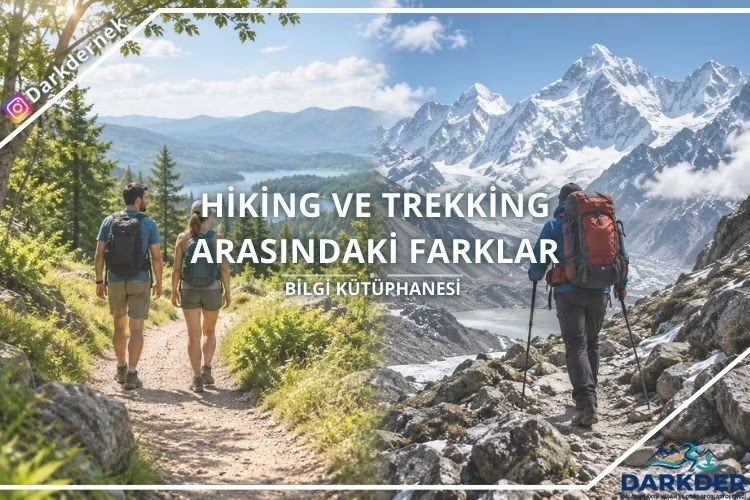
What are the differences between hiking and trekking? Although they are both outdoor activities with a common purpose, they are distinct things.
When considering the differences between hiking and trekking , they are fundamentally the same but operate differently. Although both are walking sports performed in nature, their content differs.
What is hiking? What are some examples of hiking?
Hiking is a type of nature walk that takes place on designated trails or easily accessible routes, usually lasting a few hours or completed within a day. Hiking routes can consist of forest paths, rural areas, lake shores, canyons, plateaus, or marked walking trails. The main purpose is to spend time in nature, get exercise, explore the environment, and escape the pace of daily life.
Advanced outdoor experience is often not necessary for hiking . However, appropriate footwear, sufficient water, and basic hiking equipment are important, depending on the length of the trail, altitude, and weather conditions. In short, hiking can be defined as relatively accessible day trips in nature. For example, all day trips where we set off in the morning and return in the evening are known as " hiking ." (pronounced " hayking ").
What is trekking? What are some examples of hiking?
Trekking is a type of nature walk that is longer, requires more endurance, and is generally performed in more challenging terrain than hiking. Trekking routes can last a full day rather than just a few hours, or consist of stages spread over several days. On long-distance treks, hikers may camp, stay at designated resting places, and carry necessary equipment in their backpacks.
Trekking routes can include mountainous regions, high-altitude passes, valleys, forested areas, and trails far from settlements. Therefore, route knowledge, weather monitoring, and adequate food and water planning are more important than in hiking. In short, trekking refers to longer-distance, more extensively prepared, and often more challenging nature walks.
For example, our Lycian Tours, which include overnight stays of several days, fall under the category of trekking.
What are the differences between hiking and trekking?
The main differences between hiking and trekking can be summarized as follows:
- Duration: Hiking usually lasts a few hours or a day, while trekking can continue for several days.
- Distance: Hiking routes are generally shorter, while trekking routes can consist of much longer stages.
- Trail difficulty: Hiking trails are mostly well-defined and easy to follow. Trekking trails may include more rugged and challenging terrain.
- Physical endurance: Trekking may require a higher level of fitness and endurance than hiking due to the longer duration of the walk.
- Equipment: For hiking, a small backpack, water, and basic walking gear may suffice. Trekking, however, may require camping gear, additional clothing, food, and more comprehensive equipment.
- Accommodation: Hiking is usually completed within the same day. Camping or other accommodation options are available during trekking.
- Route planning: Planning for hiking routes can be simpler. Trekking requires a more detailed assessment of the route, water sources, resting places, and weather conditions.
- Time spent in nature: While hiking offers a few hours of activity in nature, trekking involves spending a longer time in the wilderness.
- Load carried: Hiking typically involves carrying lightweight equipment. Trekking, on the other hand, may involve a heavier backpack due to the needs of prolonged travel.
- Preparation level: Hiking may be more accessible for beginner nature enthusiasts. Trekking, on the other hand, may require more experience and preparation depending on the route.
Hiking and trekking are two of the most enjoyable ways to connect with nature. The most significant differences between them lie in the duration, distance, and required level of preparation. Hiking encompasses shorter, day-long walks, while trekking refers to longer and more extensive journeys through nature.